The Fermi Paradox: If the Universe Is So Big, Where Is Everybody?
There are 100 billion stars in our galaxy alone, many older than the Sun. By every reasonable estimate the galaxy should be teeming. So why is the sky so silent?
By ÆTHERION Editorial
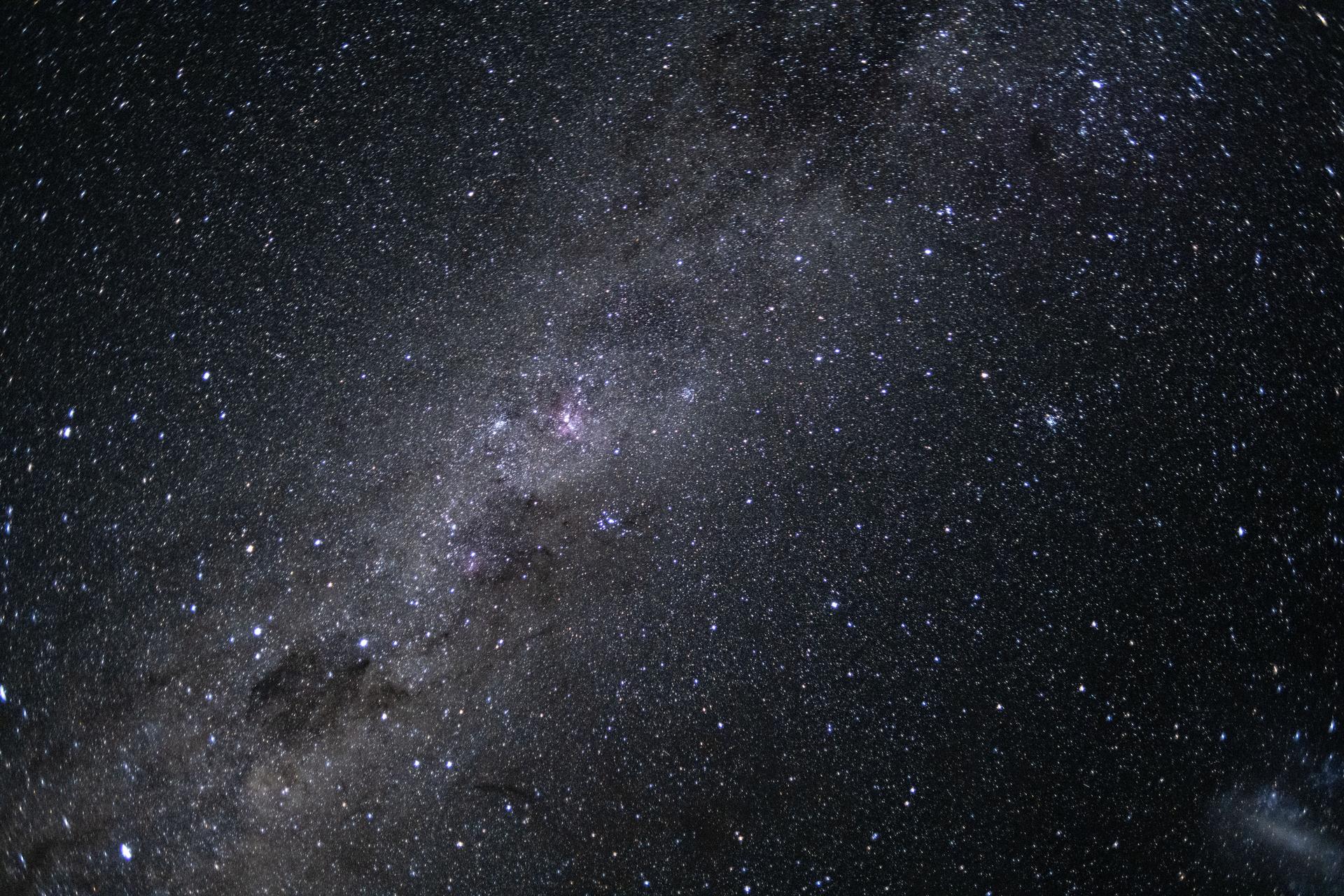
In 1950, over lunch at Los Alamos, the physicist Enrico Fermi asked a question so simple it has haunted science ever since: 'Where is everybody?' The galaxy is unimaginably old and unimaginably vast. The Sun is a relative newcomer; billions of stars predate it by eons, with billions of years' head start on producing life and intelligence. A single civilization with modest rockets could, in principle, colonize the entire Milky Way in a few million years — a cosmic eyeblink. So the galaxy should be crowded. Instead, we hear nothing. This is the Fermi Paradox, and every proposed answer is unsettling in its own way.
Answer one: they aren't there
The most deflating possibility is that the silence is honest — that intelligent, communicative life is staggeringly rare, perhaps unique. This is where the idea of the 'Great Filter' enters. Somewhere on the long road from dead chemistry to galaxy-spanning civilization, there may be a barrier almost nothing crosses.
The chilling twist is that we don't know whether the Filter is behind us or ahead. If the hard step was the origin of life itself, or the leap to complex cells, then we may have already passed it and the galaxy is ours for the taking. But if the Filter lies ahead — if technological civilizations reliably destroy themselves — then our silence is a warning written in advance.
Answer two: they're there, and we can't tell
Maybe the galaxy is full and we are simply bad listeners. We have been capable of detecting radio signals for barely a century, and broadcasting for less. Our search has covered a vanishing fraction of the sky, the frequencies, and the time. Expecting to have found anyone yet may be like dipping a glass into the ocean and concluding it holds no fish.
There is also the assumption problem. We listen for radio because radio is what we use. A civilization a million years older might communicate by means we have no concept of — the way a smartphone's signals would be invisible to someone scanning for smoke signals.
Answer three: they're hiding
Then come the answers that blur the line between astronomy and the subject of this magazine. The 'Zoo Hypothesis' proposes that advanced civilizations know we are here and deliberately leave us alone — a quarantine, a nature preserve, a policy of non-interference toward a species not yet ready for contact. The 'Dark Forest' hypothesis is grimmer still: that the galaxy is silent because announcing your presence is suicidal, and every wise civilization hides.
It does not escape the UFO community's notice that the Zoo Hypothesis and the disclosure narrative rhyme. If you already believe contact is occurring quietly, the Fermi Paradox is not a paradox at all — it is exactly what managed, deniable contact would look like from the inside.
Why the question matters
It is tempting to treat Fermi's question as a parlor game, but it carries real weight. Each answer is a different prophecy about our own future. If the Filter is ahead, our task is survival. If the galaxy is a quiet zoo, our task is patience. If the forest is dark, our century of cheerfully broadcasting our location was a mistake we cannot take back.
Two possibilities exist: either we are alone in the universe or we are not. Both are equally terrifying. — often attributed to Arthur C. Clarke
The honest scientific position today is that we do not know — that the data are too thin, the search too young, and the assumptions too human to declare the matter settled in any direction. But the question itself is a gift. It forces a young species to look up, to do the math, and to ask not only whether anyone is out there, but what kind of civilization we intend to become before we find out.