The Great Filter: The Most Unsettling Answer to the Silence
If the galaxy should be teeming with life and isn't, something must be stopping it. The only question that matters is whether that obstacle lies behind us — or still ahead.
By ÆTHERION Editorial
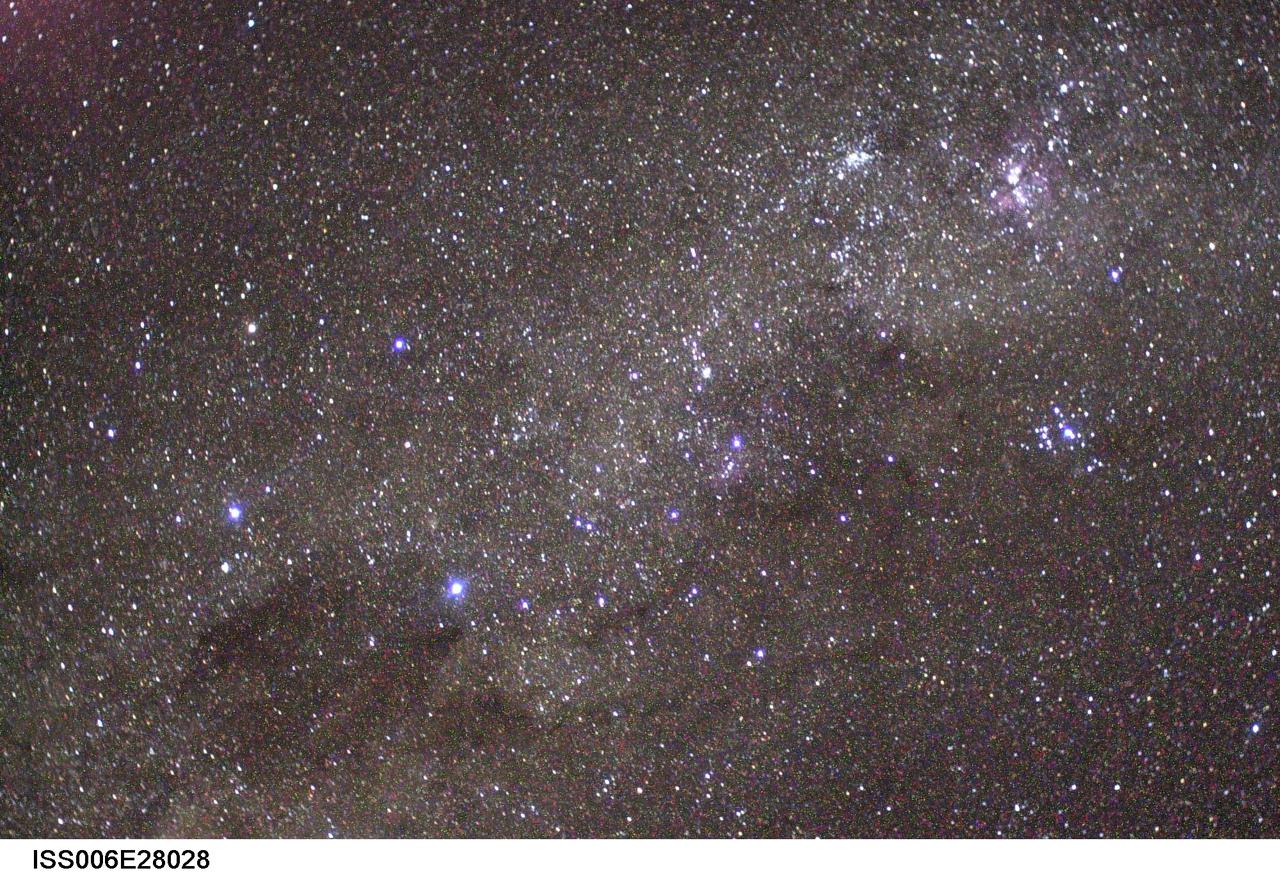
The Fermi Paradox poses the question — if the universe should be crowded, where is everybody? — but it offers no answer. The Great Filter is one of the most rigorous, and one of the most disquieting. Proposed by the economist Robin Hanson in 1996, it begins from a simple observation: somewhere along the road from lifeless chemistry to a civilization that spreads across the stars, there must be at least one step so difficult that almost nothing makes it through. Otherwise the galaxy would be loud, and it is silent.
Where could the filter be?
The path from dead matter to a star-faring species has many stages, and the filter could sit at any of them:
- ◇Abiogenesis — the leap from non-living chemistry to the first self-replicating life.
- ◇The jump from simple cells to complex ones, which on Earth took billions of years and may have happened only once.
- ◇The emergence of complex life, then of intelligence, then of technology capable of reaching beyond a home world.
- ◇And finally, surviving that technology long enough to use it.
The whole argument turns on a single question: is the filter behind us, or is it ahead?
The two terrifying possibilities
If the filter lies behind us — if abiogenesis, or the birth of the complex cell, is the near-impossible step — then we are among the rare survivors, perhaps nearly alone. That is a lonely thought, but a safe one. It means the hardest part is already done, and the stars ahead are empty because so few ever reach the threshold we have already crossed.
If the filter lies ahead, the implication is far darker. It would mean that civilizations reliably arise — and then reliably destroy themselves, through nuclear war, climate collapse, engineered pathogens, or some technology they could not control, before they ever spread far enough to be seen. In that reading, the silence of the sky is not loneliness. It is a warning written in the absence of everyone who came before.
Why finding life could be bad news
This leads to one of the most counterintuitive arguments in all of science, made forcefully by the philosopher Nick Bostrom: that we should hope to find Mars sterile. If we were to discover that life arose independently elsewhere in our own solar system, it would tell us that life is easy and common — which means the great improbable step is not behind us at all. It would push the filter forward, toward the part of the road we have not yet walked. The more abundant life turns out to be, the more ominous the silence becomes.
Where ÆTHERION lands
The Great Filter is a probabilistic argument resting on a sample size of one, and it should be held loosely; it is a lens, not a law. But it reframes our entire predicament with uncomfortable clarity. Our great challenges — keeping ourselves from war, from ecological ruin, from our own most powerful inventions — may not be merely political problems. They may be the exam that the universe has, so far, watched almost everyone fail.
Empty skies are not necessarily peaceful skies. They may simply be the silence of everyone who came before us, and didn't make it through.
There is an optimistic reading, and it is worth holding onto. Perhaps we are early — among the first to reach the threshold in a young universe — and the silence is not a graveyard but an empty stage. Either way, the Great Filter turns the search for extraterrestrial life into something stranger than a search. It turns it into a mirror.