Tabby's Star: The Megastructure That (Probably) Wasn't
A distant star dimmed in patterns no orbiting planet could produce. For one electric stretch, serious astronomers asked aloud whether we were watching the work of an alien civilization.
By ÆTHERION Editorial
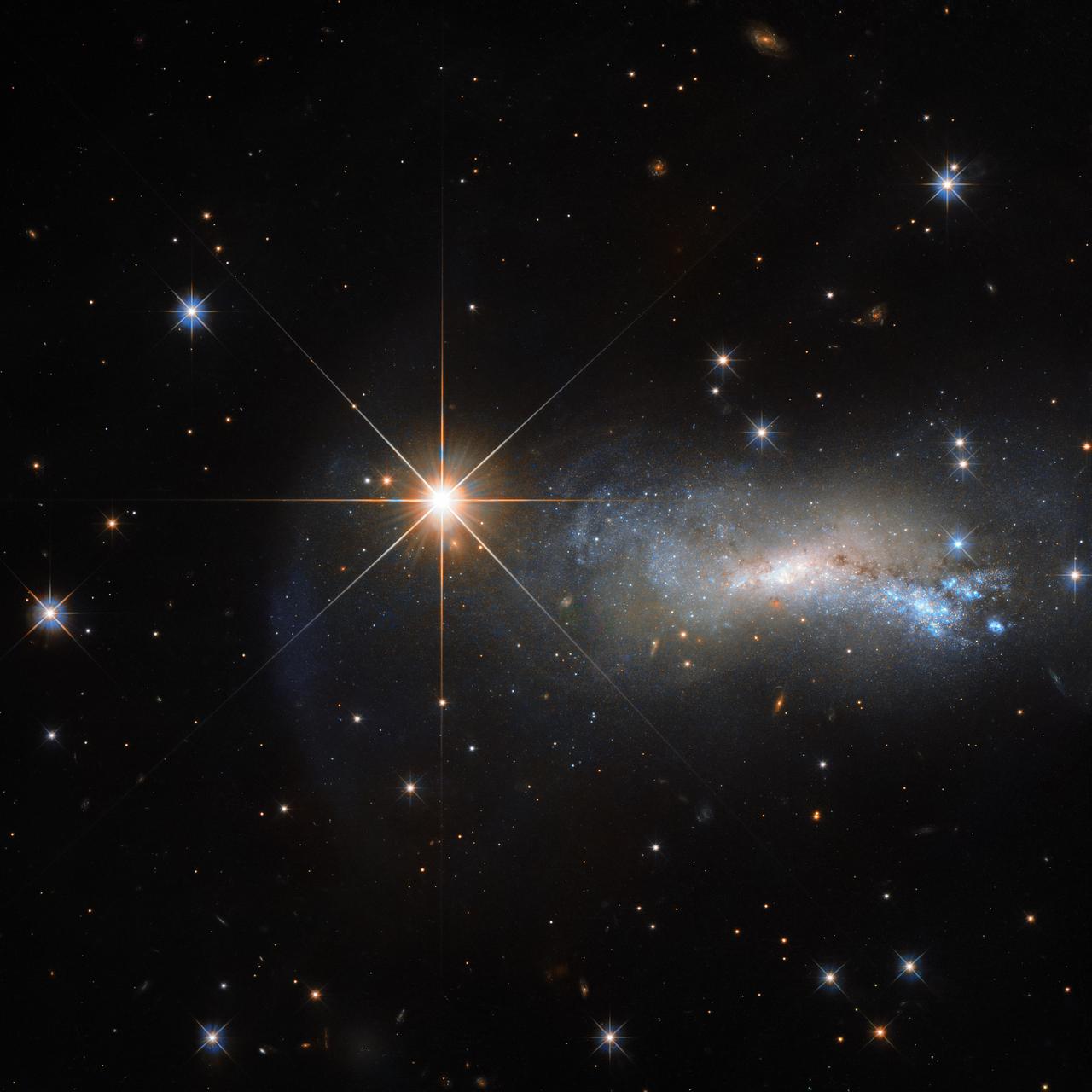
Buried in the data from NASA's Kepler space telescope was a star with a catalogue number, KIC 8462852, that would soon be known by the name of the astronomer who led its study: Tabby's Star, after Tabetha Boyajian. What set it apart was the way its light flickered. Planets passing in front of a star dim it by a fraction of a percent, on a clean, repeating schedule. Tabby's Star dipped by as much as twenty-two percent, in deep, jagged, irregular drops that fit no planet, no clean orbit, no model anyone had.
It was first flagged not by an algorithm but by volunteers in the Planet Hunters project, citizen scientists combing the light curves by eye. They could tell something was wrong. No one could say what.
The Dyson swarm hypothesis
In 1960, the physicist Freeman Dyson had argued that a sufficiently advanced civilization, hungry for energy, might gradually surround its star with a swarm of collectors. A partial, half-built swarm would block its starlight in exactly the kind of deep, irregular, non-repeating way Tabby's Star displayed. The astronomer Jason Wright raised this possibility — carefully, as a hypothesis worth testing rather than a claim — and the media did the rest. 'Alien megastructure star' ran around the world.
Following the data
This is where the story becomes a model of how the question should be handled. SETI pointed radio telescopes at the star, listening for any artificial signal. They heard nothing. Then came the decisive test. A solid structure blocks every color of light equally; a cloud of fine dust blocks blue light more than red. When the star dimmed again under close observation in 2017, the dimming was wavelength-dependent — bluer light was blocked more. That is the unmistakable fingerprint of dust, not of a solid object.
The leading explanation today is mundane by comparison and fascinating in its own right: clouds of fine dust orbiting the star, perhaps debris from a shattered exomoon or a swarm of disintegrating comets, periodically drifting across our line of sight.
Where ÆTHERION lands
It was not aliens. But it would be a mistake to file the episode under failure. An anomaly was spotted; a bold hypothesis was stated openly rather than suppressed for fear of embarrassment; instruments were trained on it; and the question was resolved by evidence rather than by authority. Out of it grew a legitimate research program — the 'Dysonian' search for technosignatures, scanning the sky for the waste heat and shadows of civilizations that may have learned to harvest their suns.
Tabby's Star taught us how to be excited responsibly — to say 'it might be them,' and then do the work that proves it probably isn't.
The next anomaly will get the same treatment: the bold guess, the listening, the wavelength test, the patient narrowing of possibilities. Most will dissolve into dust and comets, as this one did. The discipline is in being ready for the day one of them doesn't.