3I/ATLAS: The Third Interstellar Visitor and the Water That Shouldn't Be There
In 2025 a third object from beyond our solar system came barreling through — and its chemistry is unlike anything we've ever measured at home. Naturally, the old question returned: could it be more than a comet?
By ÆTHERION Editorial
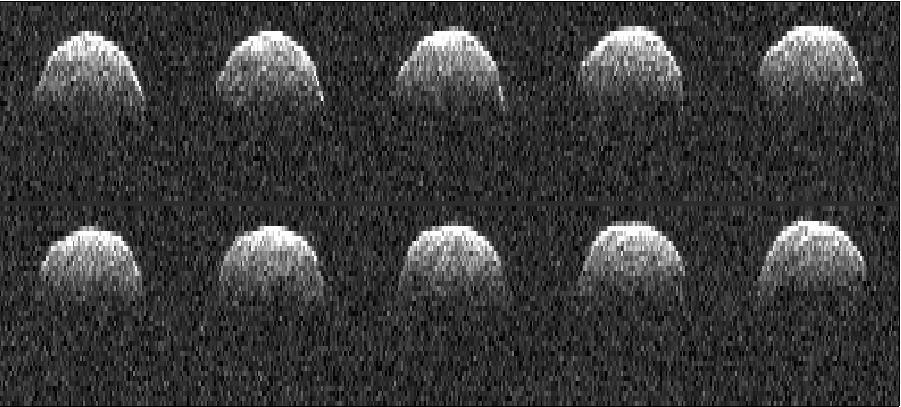
On July 1, 2025, the ATLAS survey — a network of telescopes built to spot dangerous near-Earth asteroids — logged a new object on a trajectory that could not be explained by the Sun's gravity alone. Its orbit was hyperbolic: it had not come from our solar system, and it would not stay. Astronomers designated it 3I/ATLAS, the third confirmed interstellar object ever observed, following 'Oumuamua in 2017 and the comet 2I/Borisov in 2019.
Where 'Oumuamua had been a maddening blur that vanished before we could study it, 3I/ATLAS announced itself politely as a comet — a fuzzy coma, a developing tail, the unmistakable signature of an icy body warming as it neared the Sun. It should have been a tidy sequel, an interstellar visitor that behaved exactly as the textbooks predicted. Then the chemistry came back.
The water that shouldn't be there
Spectroscopic measurements reported in 2026 found that 3I/ATLAS carries an astonishingly high proportion of 'heavy water' — water built from deuterium, a heavier isotope of hydrogen, rather than ordinary hydrogen. The ratio of heavy to normal hydrogen in a comet is one of the most reliable fingerprints we have of where and how it formed; it encodes the temperature and chemistry of the cloud that birthed it. And 3I/ATLAS's ratio lies far outside anything measured in the comets of our own solar system.
The implication is quietly profound. This object condensed around another star, in conditions unlike any in our neighborhood, and has now drifted close enough for us to read its composition. It is, in the most literal sense, a free sample of alien chemistry delivered to our doorstep — no probe required.
Enter Avi Loeb, again
The Harvard astronomer Avi Loeb, who had argued that 'Oumuamua deserved consideration as an artificial object, returned to the stage. He pointed to features of 3I/ATLAS he called statistically unusual — aspects of its trajectory, its brightness, the timing of its closest approach to the Sun — and argued, as before, that the artificial hypothesis should not be ruled out before it is tested. The internet did the rest, and within weeks 'interstellar comet' had mutated, in countless posts and videos, into 'alien spaceship.'
The mainstream of astronomy was unpersuaded. Most researchers read 3I/ATLAS as a comet — an unusual one, certainly, with exotic chemistry, but a comet whose 'strange' behaviors each have natural explanations. Researchers who study online misinformation documented, in near real time, how the alien-craft claim spread far ahead of and largely detached from the actual data, a textbook case of a scientific anomaly being inflated into a conspiracy.
Where ÆTHERION lands
3I/ATLAS is almost certainly a comet, and almost certainly not a ship. But notice how much wonder that 'mundane' answer still contains: a chunk of another solar system, forged in a chemistry we have never seen, fell through ours and let us taste it. The rush to shout 'spaceship' did not heighten the mystery — it cheapened a discovery that was already extraordinary on its own terms. We keep doing this. We did it with 'Oumuamua, and we did it again here.
We keep scanning these visitors for a signal, and missing the message they actually carry: that the chemistry of other worlds is now arriving at our door, unbidden.
The deeper lesson is that interstellar visitors are turning out to be far more common than anyone expected a decade ago, and the Vera Rubin Observatory is poised to find many more. 3I/ATLAS is a rehearsal — for the instruments that will catch the next one earlier, and for our own ability to meet a genuine anomaly with patience rather than panic, on the day one of these objects finally refuses to behave like a comet.