'Oumuamua: The Interstellar Visitor We Couldn't Explain
In 2017, something from another star system fell through ours — and behaved like nothing we'd ever tracked. A Harvard astronomer said the unthinkable out loud, and the argument it started has never really ended.
By ÆTHERION Editorial
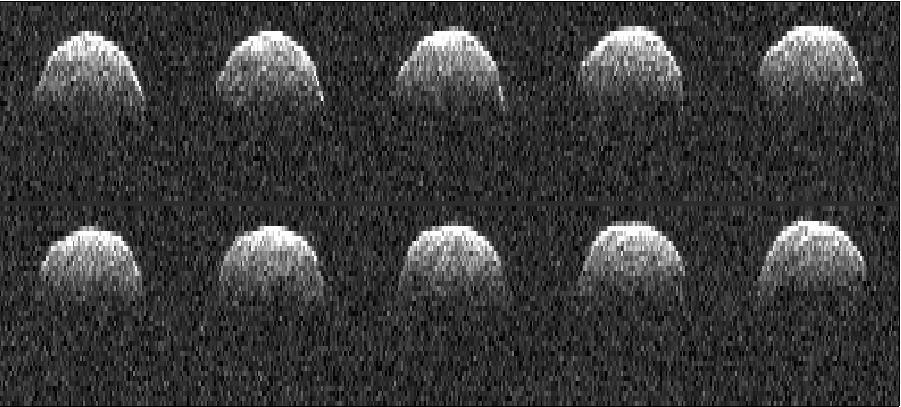
On October 19, 2017, the Pan-STARRS telescope on Haleakalā in Hawaii caught a faint smudge of light moving on a path that no object born in our solar system could follow. Within days the orbit was unmistakable: it had come from interstellar space, swung around the Sun, and was already on its way back out, never to return. It was the first confirmed visitor from another star, and astronomers gave it a Hawaiian name — 'Oumuamua, a scout or messenger reaching out from the distant past.
We had only a few weeks to study it before it faded beyond reach, and almost everything we learned in that window was strange.
The anomalies
- ◇Its brightness swung by a factor of ten as it tumbled, implying an extreme shape — something like ten times longer than it was wide, a cigar or a flattened disc unlike any asteroid we'd catalogued.
- ◇It showed no coma and no tail. A comet this close to the Sun should have been venting gas and dust; 'Oumuamua appeared bone dry.
- ◇And yet, as it departed, it accelerated — gently, but measurably — pushed by some force beyond the Sun's gravity alone.
That last point is the heart of the mystery. Comets accelerate too, propelled like tiny rockets by the gas boiling off their surfaces. But 'Oumuamua showed no visible outgassing. Something was nudging it, and we could not see what.
The hypothesis that made headlines
Avi Loeb, then chair of Harvard's astronomy department, proposed an explanation that most of his colleagues would not say aloud: that 'Oumuamua might be artificial — a thin, light-driven sail, pushed by the pressure of sunlight the way a solar panel is warmed by it. His argument was less 'this is a spacecraft' and more provocation: every natural explanation on the table, he pointed out, also required an object unlike anything we had ever observed. If we were inventing unprecedented natural bodies anyway, why was the artificial hypothesis the only one ruled out in advance?
The pushback was fierce. Most astronomers favored exotic but natural answers: a fragment of frozen nitrogen sheared off a distant Pluto-like world, a fluffy fractal aggregate of dust loose enough to be pushed by light, or an iceberg of hydrogen that sublimated invisibly. Each is plausible. Each also describes a kind of object we have never directly confirmed exists.
Where ÆTHERION lands
The honest position is that 'Oumuamua was probably natural — but 'probably' is carrying real weight, because every leading explanation invokes something we've never seen. Loeb's deeper point survives the debate intact: we were caught flat-footed. We found our first interstellar visitor on its way out the door, with no instrument staged to chase it. The lesson was never really about aliens.
The lesson of 'Oumuamua is not that we were visited. It is that we were unprepared to find out either way.
Two years later a second interstellar object, 2I/Borisov, passed through — and this one was an unambiguous comet, ordinary in every way 'Oumuamua was not. The Vera Rubin Observatory is expected to find more of these visitors, perhaps many. Next time we will be watching the door before it opens, and the answer, whatever it is, will not get away from us so easily.